Rules and ethics
What Cardiff Council's Welsh Language Standards require of bilingual English and Welsh content
What City of Cardiff Council requires of bilingual English and Welsh copy under its Welsh Language Standards, by standard number, and how to check other Cardiff bodies.
What Cardiff Council's Welsh Language Standards require of bilingual English and Welsh content
Which Cardiff bodies have notices to check
Two of the most common Cardiff commissioners are the City of Cardiff Council and the Welsh Government, whose offices are in the city. Both are covered by the Welsh Language Standards (No. 1) Regulations 2015, and each has its own compliance notice from the Welsh Language Commissioner. Cardiff Council's compliance notice is dated 30 September 2015, and most of its standards applied from 30 March 2016.
Other Cardiff commissioners have their own notices, so check each one separately. Cardiff and Vale University Health Board, for example, says it received its notice on 30 November 2018 and has met the standards in it since 30 May 2019. Never assume that another body's notice applies to your brief.
What the Cardiff Council notice requires of written content
The notice numbers each standard. These are the ones that most often shape a writer's brief. The Welsh Government's notice is separate and numbered differently, so ask for it when that body is the client, and recheck any notice before relying on it, as notices can be varied.
- Publicity and advertising (standard 37):produced in Welsh. If it also appears in English, the Welsh version must not be treated less favourably.
- Leaflets, brochures and rules (standards 43 and 45):any brochure, leaflet, pamphlet or card informing the public, and any published rules that apply to the public, must be produced in Welsh.
- Press statements (standard 46):issued in Welsh, and where both language versions exist they are issued at the same time.
- Other public documents (standards 47 to 49):produced in Welsh where the subject or the expected audience suggests it. Where both versions exist, Welsh must not be treated less favourably, and a separate English version must say that Welsh is available.
- Forms (standards 50 to 50B):produced in Welsh, with the same deadlines and requirements in both languages.
- Websites and apps (standards 52, 55, 56 and 57):the text of each page is available in Welsh and fully functional. An English page states that Welsh exists and links to it, menus and interface are in Welsh, and apps work fully in Welsh.
- Social media (standards 58 and 59):Welsh must not be treated less favourably than English, and a Welsh message that needs an answer gets a Welsh reply.
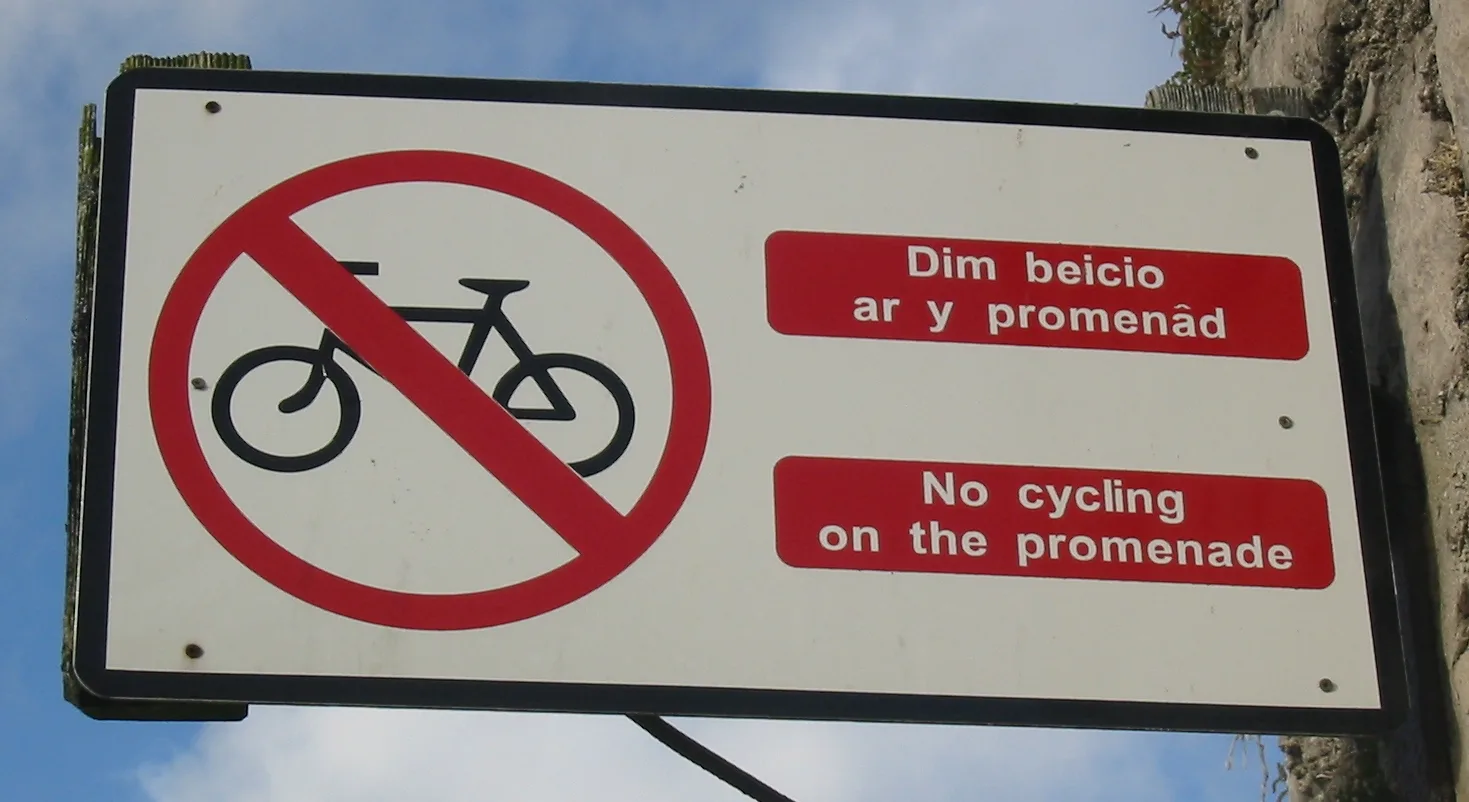
- Signs (standards 61 to 63):new or renewed sign text is displayed in Welsh, accurate in meaning and expression, and positioned to be read first where both languages appear.
Mistake: Release English while Welsh is still pending
The costliest mistake is to publish English while a required Welsh version is unfinished. That makes access uneven and can put the commissioning body in breach. Treat bilingual availability as a release condition from the outset, not as a later copy-edit task after English has already gone live.
The Welsh Language (Wales) Measure 2011 gives Welsh Ministers the power to specify Welsh-language standards for covered bodies. Those standards replaced older Welsh Language Schemes, and the Welsh Language Commissioner can investigate and enforce breaches. Establish whether a duty applies before deciding how the copy will be made.
The fix is to name the client organisation and inspect its compliance notice before setting deliverables. That notice identifies the standards applying to that body, so do not borrow assumptions from another public organisation. Put simultaneous English and Welsh availability into the brief and make it part of the approval and release plan.
Mistake: Treat Welsh as a retrofit to approved English
Starting with approved English and commissioning Welsh afterwards turns bilingual production into a retrofit. Welsh wording may not follow English sentence shapes or word lengths, leaving headings, buttons, forms and layouts awkward or requiring changes after the English design has been settled.
The fix is to bring both languages into drafting from the beginning. Reserve space for each version and shape headings, calls to action and form labels together. Give Welsh the same editorial care as English, while allowing each version to read naturally rather than forcing identical phrasing. Add language and layout checks to the quality checklist.
Mistake: Assume Cardiff organisations share one set of duties
Calling a client a public body does not reveal which Welsh-language requirements apply to its Cardiff brief. Standards differ between organisations, and getting this wrong can distort the scope, schedule, estimate and review route before anyone has confirmed which services or formats are covered.
The fix is to check the named organisation's own notice before choosing channels, formats or fees. Requirements may concern in-person or telephone services for one organisation, while another has standards for corporate identity, signs or digital material. General Welsh Government information can orient the work, but the organisation's notice determines the relevant detail.
Mistake: Leave audience, register and terminology undecided
A brief that names both languages but leaves its audience, tone and terminology open invites late disagreement.
Reviewers may not share an understanding of whether the Welsh should be formal, plain or consistent with established wording, and that uncertainty can delay approval and create revisions that could have been planned for.
The fix is to describe the Welsh-speaking audience, the information it needs, the register and any approved glossary. Formal wording may suit a statutory notice, whereas public information may call for plainer language. Identify an approver for each language at briefing stage, and use audience research to test assumptions before drafting begins.
Mistake: Give both versions an unowned sign-off
A single, unnamed approval assumes that public-sector copy will pass through one reviewer. Policy, communications, translation, legal and digital teams may all request changes, so an undefined route can leave both language versions incomplete when the publication deadline arrives.
Decision to settle / What the brief should specify
- Policy review
- Confirm audience, register and applicable standards
- Communications and language review
- Send both versions for review with the approved glossary
- Legal and accessibility review
- Check each language version
- Final approval
- Name who resolves comments and authorises release
The fix is to agree reviewers, order and timing in advance, then give someone responsibility for resolving comments across teams. Neither English nor Welsh should be exempt from legal or accessibility checks. Make both versions publication-ready together, rather than progressing English through governance while Welsh waits outside the process.
Mistake: Price word count but ignore lead time
A quote based on Welsh word count alone can omit drafting, review and sign-off effort. Committee cycles, Senedd timetables and consultation windows may affect delivery, while a target publication date does not show how long internal approvals will take.
The fix is to ask about the approval timetable before promising a deadline. Allow for terminology checks, Welsh-language review and sign-off, and plan for both versions to be ready together. For framework or tender work, state any requested experience, insurance and accreditation. Set out bilingual deliverables and review rounds, using service standards to make delivery commitments clear.
Mistake: Check spelling but miss the user journey
Spelling checks alone can miss absent Welsh material, a hard-to-find language switch, inconsistent terms or a layout that works in English but fails in Welsh. Claims about services, prices and outcomes also need review in both versions before release.
The fix is to check the full user journey in both languages. Confirm that each version is available at the same time, Welsh is easy to find, glossary terms match, a Welsh reviewer has read the text, and headings, buttons and forms work in their layouts. Consider the advertising rules and UK regulations before publishing claims in either language.
Mistake: Promise Welsh delivery without showing who will do it
A promise of Welsh delivery without a named writer or reviewer gives the buyer little evidence that both languages can meet the brief. English-only samples demonstrate English work, while a vague intention to find a translator leaves responsibility for delivery and review unclear.
The fix is to provide bilingual examples where available, identify a Welsh-language partner if the lead writer does not write Welsh, and explain who handles terminology, review and approval. Buyers should be able to see ownership of each stage and how the two versions will meet governance expectations by the agreed deadline.
Price the work honestly, including the additional effort bilingual production can require, and keep insurance and policy paperwork current before tendering. A clear account of who delivers each part helps buyers assess content writing services without relying on an unsupported promise. Include Welsh-language standards, accessibility checks and the named review route in the delivery plan.